Nerve pain comes from the misfiring signal, not from injured tissue — so anti-inflammatories have little to act on. Transcutaneous electrical nerve stimulation (TENS) instead works on the gate that controls which signals reach the brain. It has been used in physical therapy and pain clinics for decades, and the clinical-grade units that used to require a prescription are now sold over the counter.
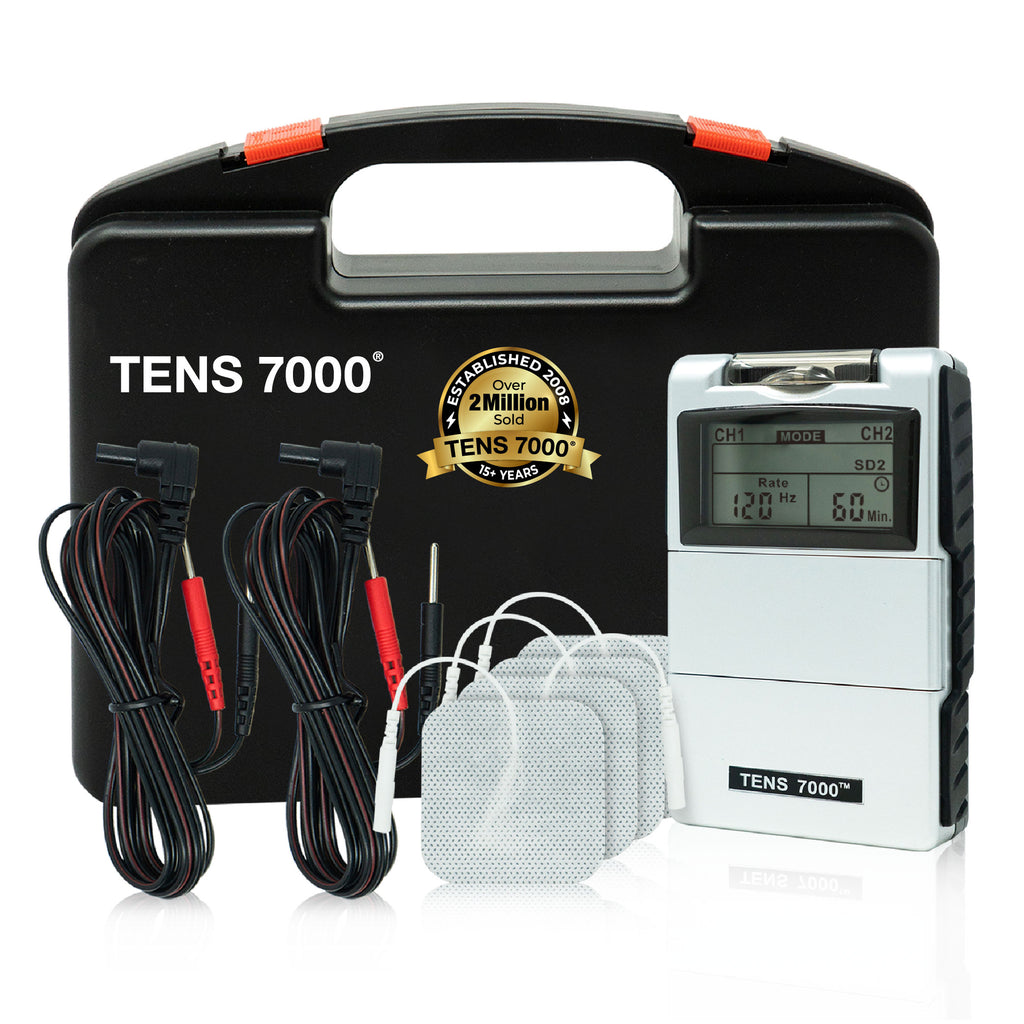 The unit discussed below
01 Why nerve pain is a different pain
Stub your toe and the pain is honest: tissue was damaged, inflammation follows, painkillers interrupt the chemistry of that inflammation. Nerve pain is not that conversation.
When a nerve is irritated, compressed, or damaged, it fires on its own. The pain is the signal itself — burning, electric, pins-and-needles, a numb patch that aches — with no injured muscle or joint behind it to treat. People dealing with diabetic neuropathy, sciatica, carpal tunnel or post-shingles nerve pain: different causes, same category.
That is why people with nerve pain so often report the same frustrating thing: the painkillers take the edge off a back strain but do almost nothing for the burning in the feet. They were designed for the other kind of pain.
02 Why ordinary painkillers miss it
Ibuprofen and naproxen work on inflammation. Acetaminophen works on pain perception centrally. Prescription nerve drugs that do exist for this category — gabapentin-type medications — come with drowsiness, dizziness, and a titration period many people cannot tolerate, and long-term use carries its own dependence questions.
So the typical path is: the over-the-counter shelf first, partial relief at best, escalating doses of something that was never designed for the problem. Meanwhile the actual signal keeps firing.
That is the gap that leaves people stuck on the OTC shelf — and the reason drug-free therapies are taken seriously in pain medicine rather than dismissed as wellness products.
03 The gate: how clinics block pain without drugs
Since the late 1960s, pain medicine has understood that the spinal cord is not a passive wire. It behaves like a gate: it decides which signals travel up to the brain and which get dampened on the way.
Here is the part that matters. The gate is opened wide by pain signals travelling on thin, slow fibres. But thick, fast fibres — the ones carrying touch, pressure, vibration — close the gate. Flood the gate with fast, harmless input and the slow pain signals get dampened before your conscious mind ever receives them.
That is the entire principle of transcutaneous electrical nerve stimulation. Pads on the skin deliver gentle electrical pulses that activate those thick fast fibres. The pain signal is not "killed" — its passage is reduced. The body's own endorphin response contributes on top of it.
TENS has been a standard clinical tool since the 1970s. It appears in NICE guidance for chronic pain, Cochrane reviews have looked at it across chronic pain conditions, and the American Academy of Neurology includes it among non-drug options for certain neuropathic pain. The devices sold in clinics are FDA-cleared medical devices — not wellness gadgets.
And here is the part most articles skip: until recently, the strong units were prescription-only equipment dispensed through clinics. The technology never stayed locked up. The clinical-grade devices that physical therapists use are now sold directly to consumers, at prices in the tens of dollars.
The unit this article is about
The clinical-grade TENS 7000 2nd Edition: FDA-cleared, dual-channel for two areas at once, five modes, sold as a complete kit for $52.99 with a one-year warranty when bought direct.
Get the TENS 7000 kit — $52.99 →Sponsored content · links may be affiliate links
04 Three everyday situations
Illustrative scenarios drawn from common situations — not real, identifiable individuals, and not testimonials.
Fifties. Years of pre-diabetes, then the tingling started in both feet — worst at night, socks off, sheets unbearable on the way to bed.
Topical cooling gels, acetaminophen around the clock, a heating pad that helped for twenty minutes and then made it worse.
A doctor-supervised plan that added a TENS unit on the feet each evening. The point was not a cure — it was a drug-free way to turn the volume down at the hour when it mattered most.
Forties, desk job. A disc issue from years ago, and a sharp electric line from buttock to calf that flares on car rides and stairs.
Anti-inflammatories for weeks. Some relief of the ache around it; almost none of the electric line itself.
Physiotherapy sessions that used clinical TENS, then a home unit for the flare days — so the therapy stopped being something that only happened in a clinic.
Thirties. Carpal tunnel from years of keyboard work. Numb thumb and middle finger, waking her by 3am, shaking the hand out at the sink.
A wrist brace (kept — it addresses the compression itself), plus painkillers that did essentially nothing for the numbness.
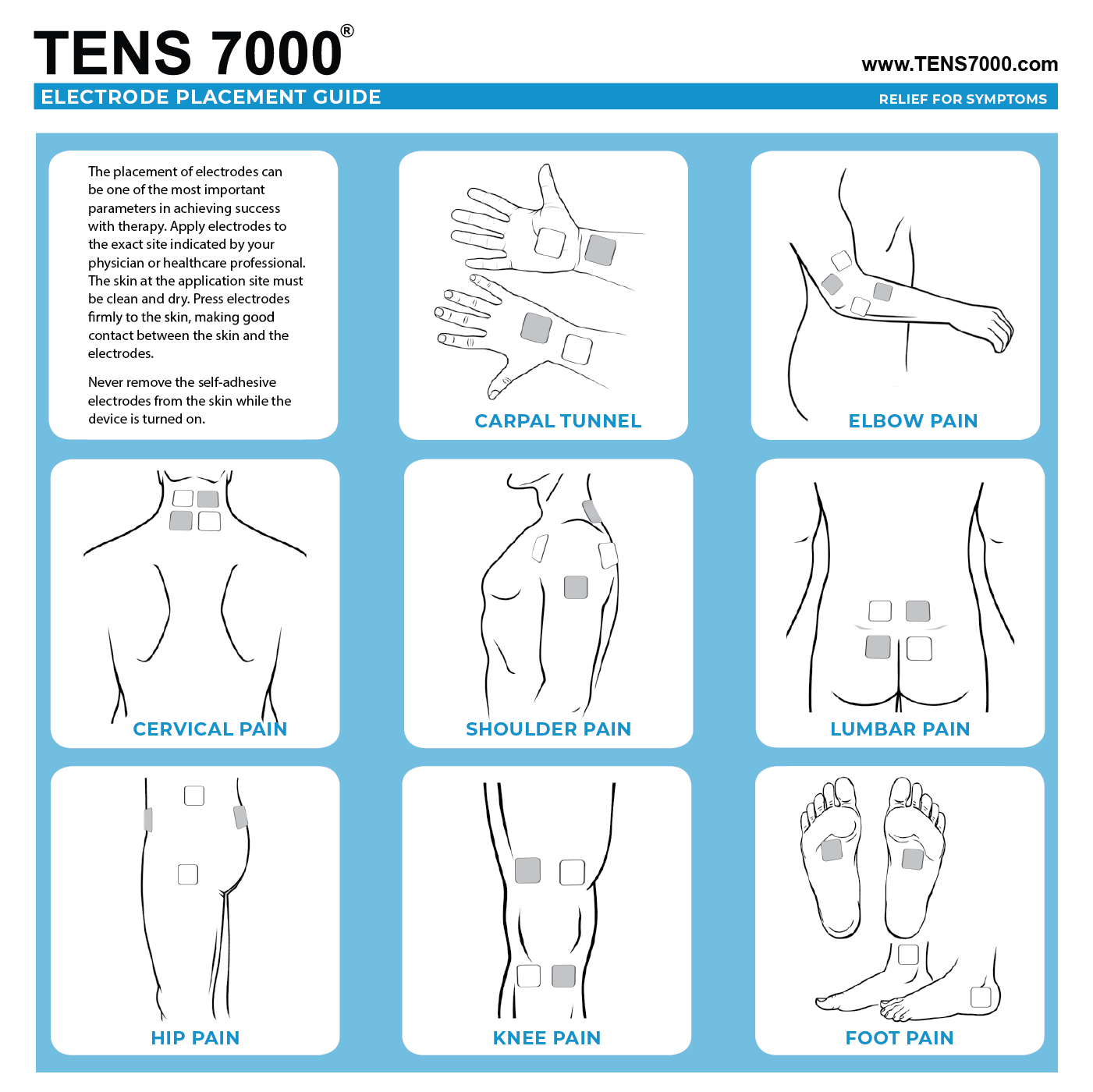
Brace for the cause, a small TENS unit for the symptom in the evenings, and a proper diagnosis so the two jobs stopped being confused with one another.
05 What to look for in an at-home unit
The category is flooded with cheap gadgets that buzz and call themselves medicine. If you are buying one for genuine nerve pain, five things separate the real thing from the toy.
The five-point check
- FDA clearance. A pain-relief claim is a regulated claim. A cleared device has been reviewed for it; a massager has not.
- Real intensity range. Nerve pain needs enough power to recruit the thick fibres. Units that top out at a light tingle are not doing the thing.
- Multiple modes. Different frequencies suit different pain — constant, burst, modulated. One mode is one guess.
- Dual channel. Two areas at once matters for both-feet or both-hands pain, and lets two people share one unit.
- Pad economics. Electrode pads are consumables. Check what refills cost before you commit to a brand.
| Option | How it works | Drug-free | Honest note |
|---|---|---|---|
| TENS unit | Activates fast fibres that close the pain gate | Yes | Relief is temporary and varies person to person; pads are consumables |
| Heat / ice | Soothes surrounding muscle, changes blood flow | Yes | Little effect on the nerve signal itself |
| OTC creams | Local counter-irritation on the skin | Yes | Surface-level; deep nerve pain sits below it |
| Oral painkillers | Inflammation or central perception | No | Not designed for nerve pain; dosing limits are real |
| Prescription nerve drugs | Dampens nerve signalling | No | Can work; side effects and tapering are the trade-off |
Kit as sold
TENS 7000 2nd Edition Digital Unit
By the brand that has supplied TENS & EMS units to physical therapists since 2008 · formerly prescription-only, now over the counter
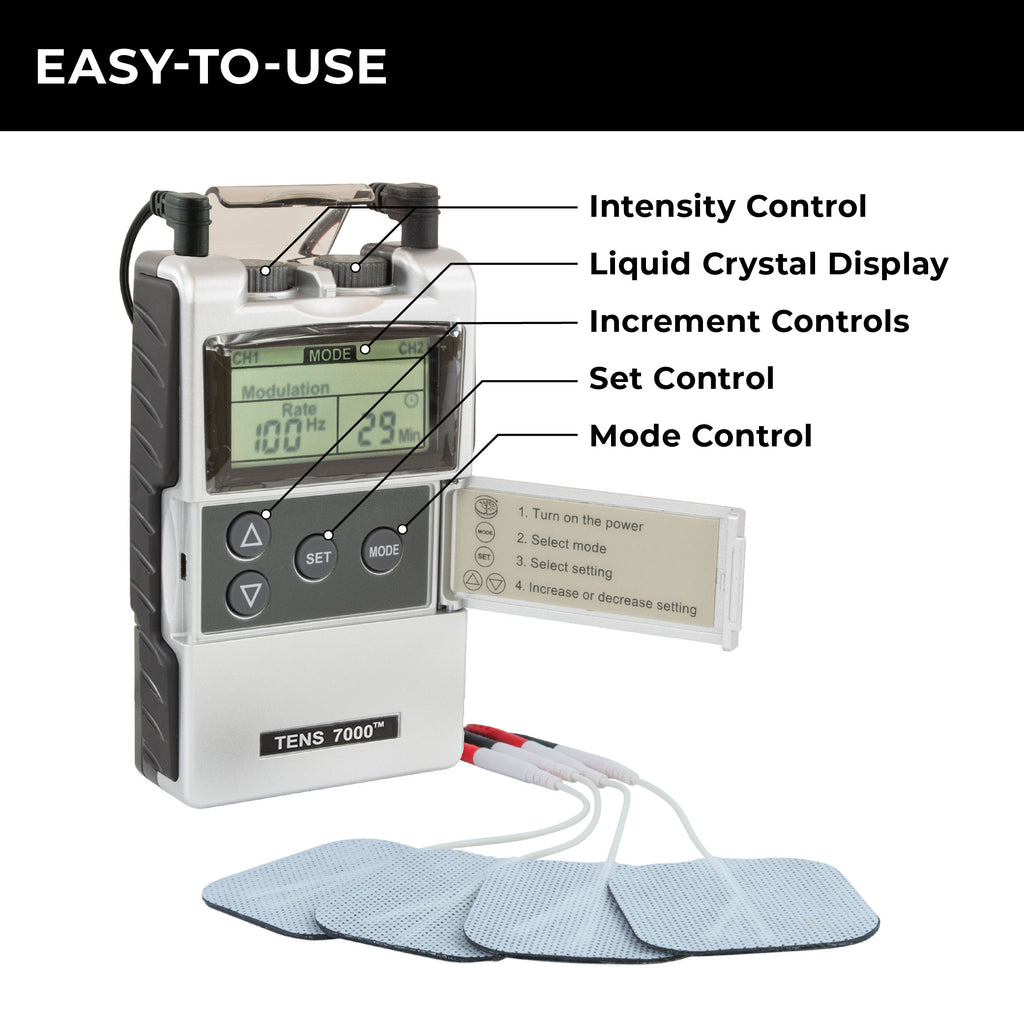
The unit physical therapists actually hand out, in a kit: the digital unit, two lead wires, four electrode pads, a 9V battery, a hard case, and a manual. Five modes, dual-channel output for two areas at once, and up to 100 mA of intensity — more headroom than most consumer units.
- FDA-cleared for drug-free pain relief — a medical device, not a massager
- Over 2 million units sold since 2008; a staple in physical therapy
- Voted a top TENS brand in a U.S. News poll of 357 pharmacists
- 4.8 out of 5 from 452 reviews on the official store; 4.6 from more than 113,000 ratings on Amazon
- One-year warranty and direct support when bought from the official store
"A long time ago I purchased one of these from my doctor for $260. This same exact unit. Now I have 3 at home and everyone I know has one."
Customer, official store"I have a TENS 7000 & it works great for me. I've had it for about 5 or 6 years."
Customer, official storeBuying direct from the official store is the route that guarantees the one-year warranty and support. Price was $52.99 at time of writing; availability and price vary by retailer.
The official store (TENS7000.com) carries the full kit with the manufacturer's one-year warranty. It is also sold by Carex (around $49), Walmart, eBay, and Amazon — where the same unit regularly drops to about $39. We lead with the official store because that $14 difference buys the one-year manufacturer warranty, the complete accessory kit, and direct support. If you want the cheapest unit and are fine accepting no warranty, the marketplaces are a reasonable choice. We do not dress that up.
- Official store · $52.99 →
- Or ~$4 less at Carex — you give up the one-year warranty and direct support
Other retailers: Walmart, eBay, Amazon (the same unit is about $39 there). Prices verified October 2026 and change often.
06 What it does not do, and when to see a doctor
The honest part
- TENS is for temporary relief of chronic pain — that is the cleared claim, and we are not going to dress it up as more. It manages a symptom; it does not repair a nerve or treat the cause.
- The research is real but not overwhelming. Cochrane reviews of TENS for chronic pain have found modest reductions in pain intensity with low evidence quality, and one review of chronic back pain found conflicting results. What is not in doubt is the mechanism and the decades of clinical use — which is why it is FDA-cleared for a pain-relief claim rather than sold as an unregulated gadget.
- Results genuinely vary. Some people get dramatic relief, some get modest, some get little. Reviews on every unit in this category include all three.
- Electrode pads wear out and need replacing — budget for refills.
- It is not for everyone: not with a pacemaker, not over the front of the neck, chest or head, not during pregnancy, and caution with epilepsy or heart disease. Read the warnings.
- A new, worsening, one-sided, or sudden nerve symptom is a diagnosis question, not a device question. See a doctor first. Loss of bladder or bowel control, or sudden weakness, is urgent.
Common questions
Does TENS actually work, or is it a placebo machine?
There is a real evidence base, with honest caveats: Cochrane reviews of TENS for chronic pain found modest reductions in pain intensity but rated the evidence quality low, and one review of chronic back pain found the results conflicting. What is not in doubt is the mechanism and the decades of clinical use. It is also not magic: relief is usually during and shortly after a session, and individual response varies. Treat it as a tool with a known mechanism, not a guarantee.
What does it feel like? Is it painful?
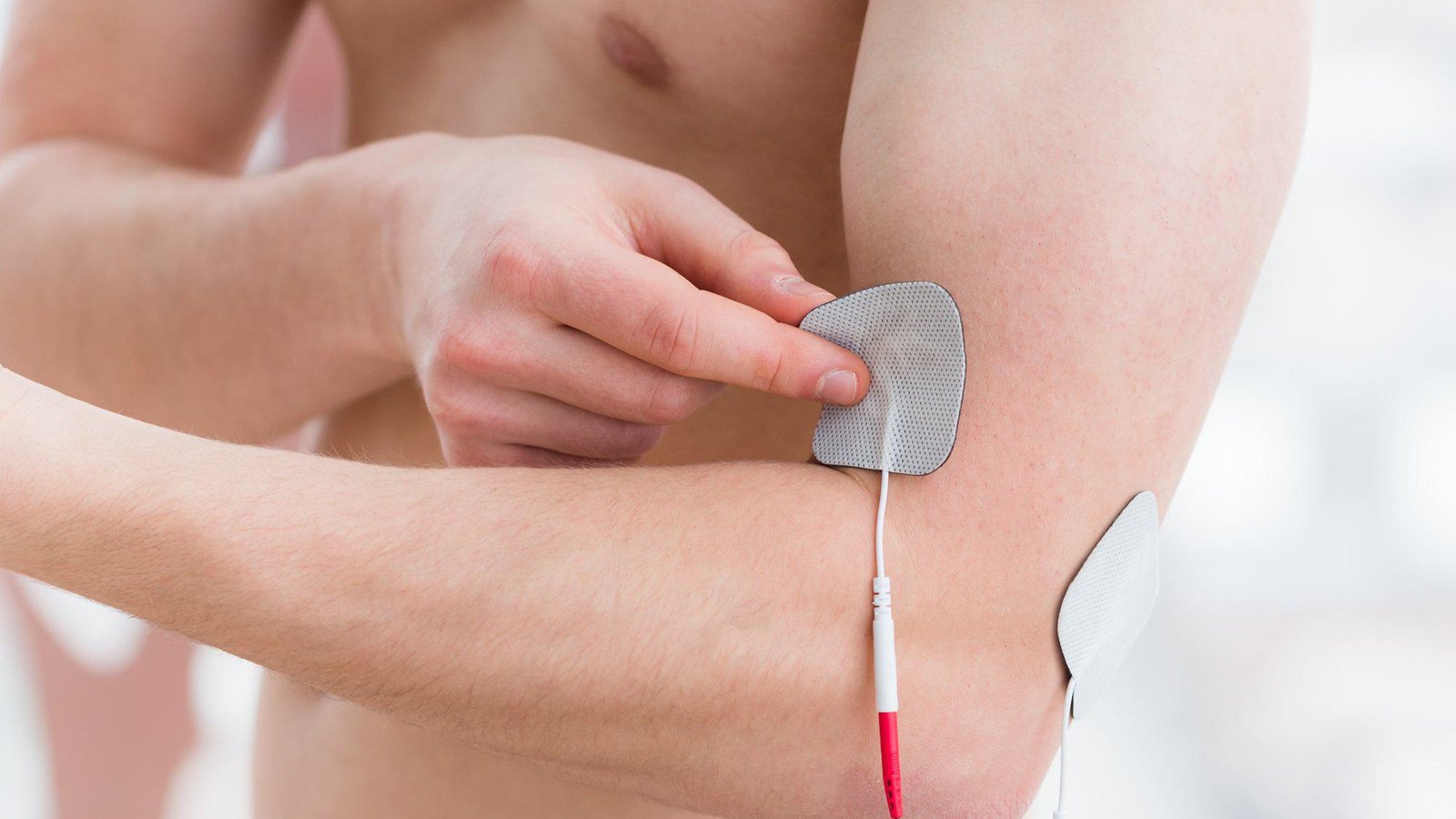
A tingling, buzzing, or pulsing sensation — starting at a level you can barely feel and turning up until it is firm but comfortable. It should not hurt. Most people describe the odd part as the first ten minutes, not the sensation itself.
How often, and for how long?
Typical use is sessions of around 15 to 30 minutes, up to a couple of times a day, following the unit's instructions. More is not automatically better; people generally use it when the pain is actually flaring.
Is it safe to use every day?
For most people, yes, within the instructions — that is what the cleared use assumes. Skin irritation under pads is the common complaint, and rotating pad positions helps. The contraindications in the honest section above are the real safety line.
Will it fix the cause of my nerve pain?
No. A compressed nerve, a diabetic nerve, a post-shingles nerve — those need their own treatment, sometimes bracing, sometimes medication, sometimes a procedure. TENS addresses the symptom. The people who get the most out of it are the ones who got a diagnosis first and then added it to a plan.
Buy the cleared device, not the gadget
The unit in this article has supplied physical therapists since 2008, sold as a complete kit for $52.99 with a one-year warranty when bought direct. For context, one customer in the reviews above was sold the same unit by their doctor for $260. At $53 for the whole kit, it is one of the least expensive serious purchases in this category.
Or ~$4 less at Carex — without the warranty and direct support.
This is sponsored content and the links may be affiliate links. Nothing here is medical advice.